Stages 01–02
Align the engagement
Confirm the business question, sponsor, scope and working arrangements.
- Pre-engagement
- Kick-off
Utomo AI Readiness Platform
Connect evidence, professional judgment and implementation priorities in one assessment workspace. Understand what your organization can support, where the gaps are and what it should do next.
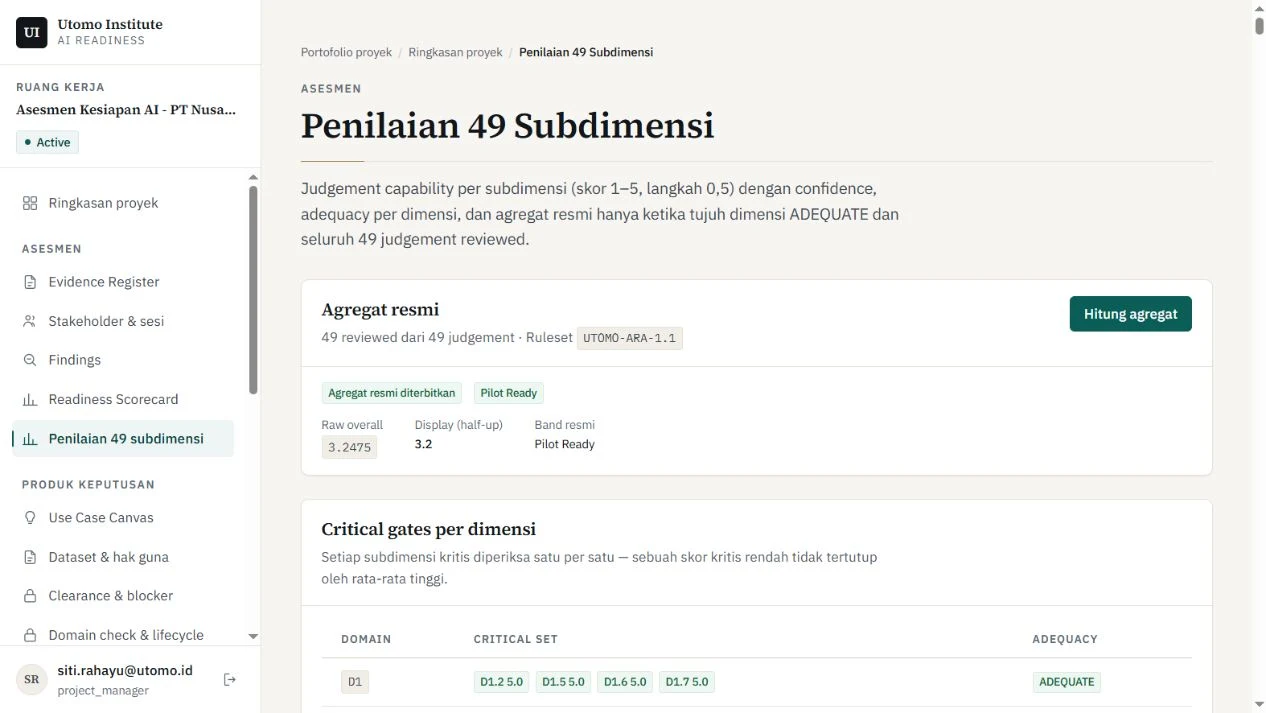
Actual platform interface · Demonstration data, not customer results
From assessment to action
The useful question is not simply how ready you are. It is what supports that judgment, which conditions are holding you back and what would make an investment worth pursuing.
The platform supports a consultant-led engagement from evidence collection to leadership discussion. It connects assessment findings with use cases, risks, roadmaps and reviewed outputs, giving teams a traceable basis for recommendations.
Define the objectives, scope and decisions the assessment should inform.
Review documents and interviews, record findings and assess readiness.
Compare use cases and risks, then sequence the work required to move forward.
Prepare versioned outputs for quality review, approval and an executive conversation.
Inside the platform
Explore six actual screens from the demonstration engagement.
Keep the assessment objective, scope, sponsor, team and methodology stages in view. A common project record connects the work to the decision the organization needs to make.
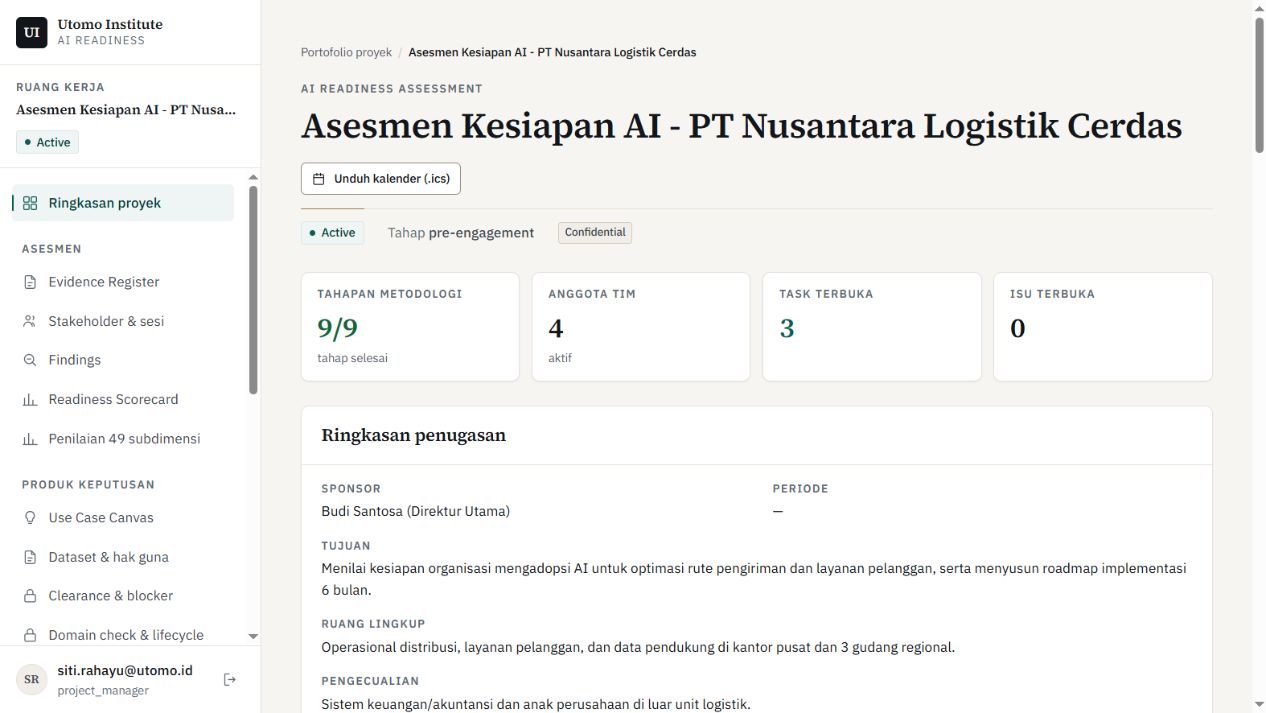
The organization, accounts, figures and records shown belong to the training scenario described in the assessment guide. They illustrate the workflow and are not evidence of customer outcomes or completed quality approval.
The readiness framework
Each dimension contains seven subdimensions. Together, they connect organizational intent with the conditions required to deliver responsible value.
The engagement
Stages 01–02
Confirm the business question, sponsor, scope and working arrangements.
Stages 03–06
Build and test the evidence, identify opportunities and review the readiness judgments.
Stages 07–09
Compare the options, sequence the work and bring reviewed recommendations to leadership.
What the work produces
The engagement brings findings into formats that support working teams and decision-makers. Outputs move through versioning, quality review and approval.
An integrated account of the context, evidence, findings and recommendations.
A structured view of readiness, supported by reviewed judgments and evidence adequacy.
A comparison of opportunities, their enabling conditions and recommended priorities.
A record of identified risks, controls and the matters that need further attention.
Sequenced actions across workstreams, with owners, dependencies and decision points.
A concise decision narrative for sponsors and leadership discussions.
Human judgment, clear responsibilities
Project managers coordinate the engagement; dimension consultants develop assessments; lead consultants review judgments. Quality review and final approval have distinct responsibilities.
Evidence versions, findings and output snapshots keep recommendations connected to their sources. When sources change, affected deliverables need attention before approval.
The optional AI Copilot requires project opt-in and written client consent. Assessment ownership, review and final decisions remain with the responsible people.
A useful first conversation
Which AI opportunities deserve investment? What needs to improve first? What should a pilot prove before you scale?
Bring your objectives, candidate use cases and assessment context. We can demonstrate how evidence, readiness judgments and priorities connect, then discuss the engagement scope and deployment requirements.
Discuss your assessmentUtomo AI Readiness Platform
See how the platform can support your assessment and next investment decision.