
← Digital Solutions

Nawala / Political Media, Social & Ground Intelligence Suite

Listen with context.
Respond with clarity.

Dengar, pahami, waspadai, bertindak.

Connect media coverage, public conversation, emerging issues and field operations in one intelligence workspace.

Nawala helps political organizations and campaign teams move from scattered information to a shared understanding of the situation—and the work that needs attention.

  1. 01

    Listen

    Bring public reporting and social conversation into view.

  2. 02

    Understand

    Read themes, tone and visibility with their sources.

  3. 03

    Watch

    Review emerging issues and potential escalation.

  4. 04

    Act

    Coordinate people, follow-up and reviewed communications.

The problem

Information moves fast. Fragmented teams struggle to keep up.

A public issue can gather momentum while reporting, social discussion and field updates remain in separate systems. By the time the team sees the whole picture, the opportunity for a measured response may have narrowed.

Media teams need to understand coverage and sentiment. Analysts need sources and comparable indicators. Field coordinators need reliable records of people, events and follow-up.

Nawala brings these responsibilities into a connected workflow, reducing the gap between noticing a signal, understanding its context and coordinating the next step.

Inside Nawala

A common picture, grounded in the data.

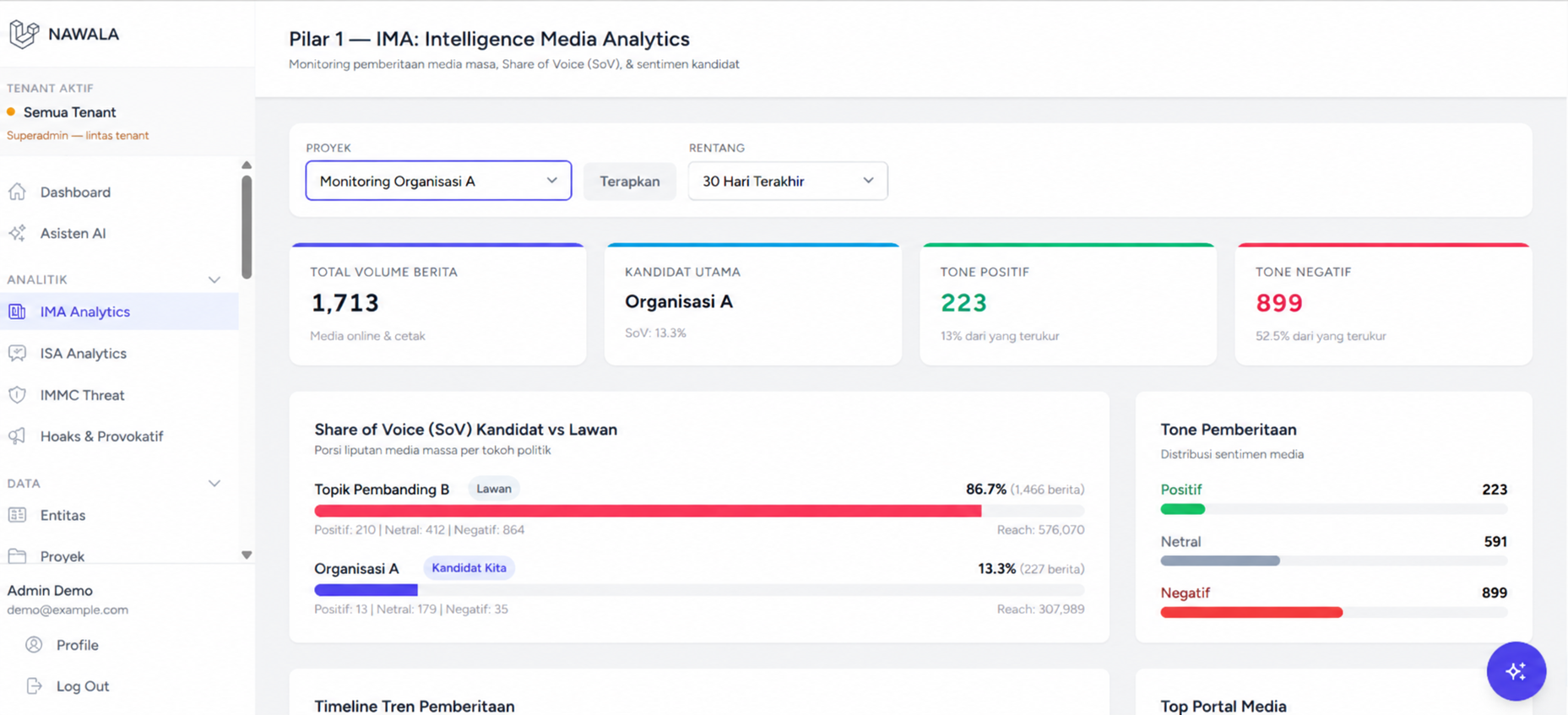
The Media Analytics view brings coverage volume, share of voice and tone into one dashboard. Read each indicator alongside the underlying reporting and the selected period.

Nawala Media Analytics demonstration: anonymized organization, reporting volume, share of voice and tone distribution.
Demonstration data. Organization, person and account identifiers have been replaced for publication; the image has been edited for anonymization. View larger ↗

Five connected pillars

From listening to coordinated action.

01 / Understand the coverage

Media Analytics

Bring online reporting, printed coverage through OCR, and television or radio transcripts into a shared analytical view. Read tone and framing alongside share of voice, reporting trends and journalist mapping.

A clearer picture of what is being reported, how it is framed and where it originates.

02 / Read the public conversation

Socio Analytics & Personal Branding

Follow public conversation across X, Instagram, TikTok, Facebook and YouTube. Sentiment analysis accommodates regional language and slang, while branding dashboards organize how public figures are discussed.

A consolidated view of conversation themes, sentiment and public visibility.

03 / Recognize signals that need review

Issue & Threat Monitoring

Track emerging issues, suspected disinformation and indicators of coordinated activity. Multi-channel crisis alerts and a 24–48-hour escalation forecast help analysts identify developments that merit closer examination.

An early-warning picture for human verification. A forecast is an estimate; a flagged account or claim is not proof of wrongdoing.

04 / Coordinate the operational work

CRM & Attendance

Organize constituent records, submitted aspirations, internal surveys, volunteers and election witnesses. QR or location-based event check-in connects attendance with the team's operational records.

A shared record of participation, responsibilities and follow-up, with personal data handled for its intended purpose.

05 / Ask questions. Keep the sources.

GenAI

Prepare daily briefings, ask questions about the data in natural language, and draft press releases or talking points with source citations. Teams review the evidence, language and context before anything is shared.

A faster first draft and a traceable path back to the information behind it.

A shared operating view

War Room mode

Bring monitoring and coordination together during election day, debates or a developing crisis. An electoral calendar and comparative tracking help the team maintain a shared timeline and situational overview.

Who it supports

Different responsibilities. One shared context.

Candidates & party leadership

Review concise briefings and understand the evidence behind emerging issues.

Consultants & campaign managers

Connect analytical reporting with the team's shared priorities and responsibilities.

Media & communications teams

Monitor coverage, verify signals and review source-backed communication drafts.

Field & volunteer coordinators

Organize participation, attendance, submitted aspirations and operational follow-up.

Campaign data analysts

Examine trends, compare reporting indicators and check the context behind automated analysis.

In practice

A clearer rhythm for the working day.

Scenario 01

The morning briefing

Start with a five-point summary of the day's reporting and public conversation. Follow citations to inspect the original sources.

Scenario 02

An issue needs attention

An unusual change in sentiment triggers a review. Analysts examine the underlying material before the communications team prepares a response.

Scenario 03

An event needs coordination

The field coordinator records volunteer attendance through QR check-in and organizes the follow-up in the same operational workspace.

Responsible use

Public information. Clear responsibilities.

Nawala is designed for defensive monitoring and informed coordination. Public-source intelligence and permissioned operational records serve different purposes and should be handled accordingly.

Sentiment, suspected coordination and escalation forecasts are analytical signals. Human review remains essential, especially when context, satire or regional language changes the meaning of a statement.

For deployment, discuss permitted sources, personal-data handling, access responsibilities and applicable electoral requirements. Software capabilities alone do not establish legal compliance.

Explore Nawala

See how the pieces
work together.

Request a walkthrough of the five pillars, source coverage and operational workflows relevant to your team.

Request a demonstration