
Completion and value
Distinguish finished deliverables from adoption, effective use and benefits. Make the definition of success explicit before work begins.
Publication / Execution & organizational capability
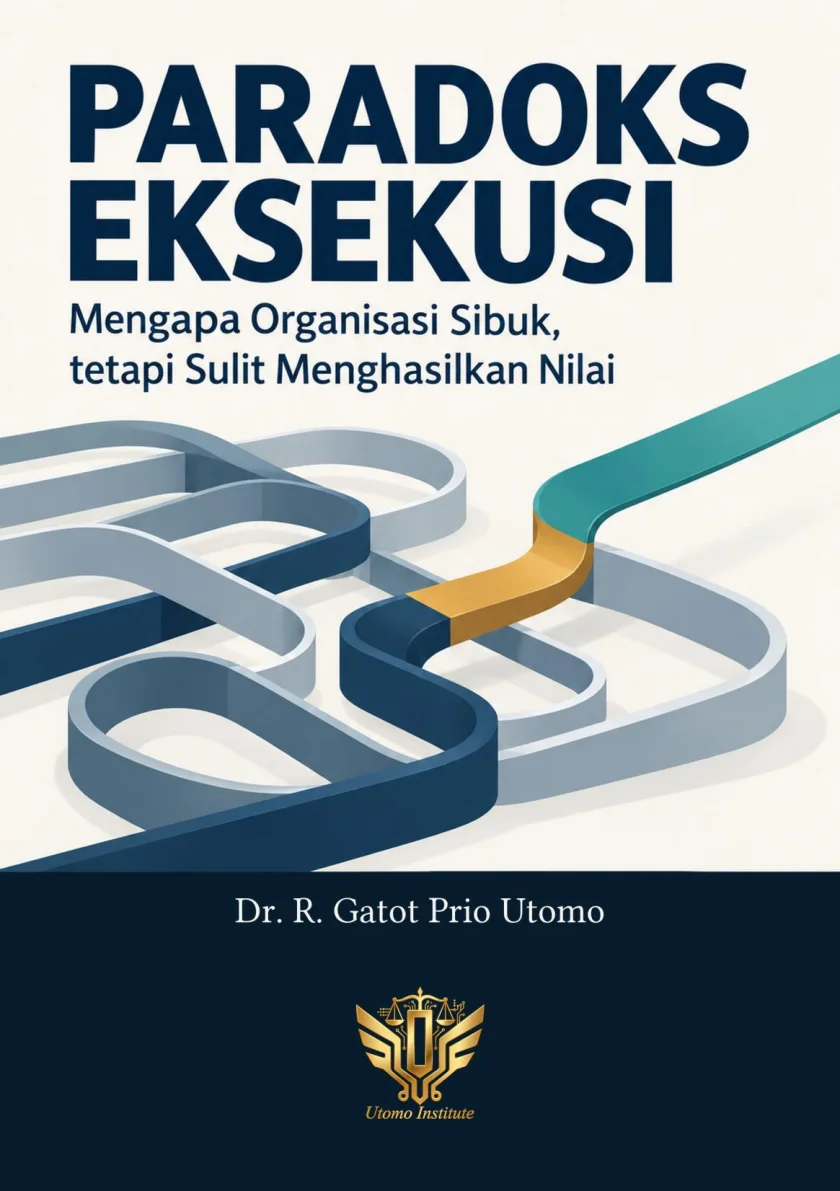
Mengapa Organisasi Sibuk, tetapi Sulit Menghasilkan Nilai
© 2026 R. Gatot Prio Utomo
Why busy organizations and completed projects do not always create value—and how learning, portfolio decisions and adaptive execution can close the gap.
Read the synopsis on this website. Full manuscripts are not available for download. Google Play Books links will be added after publication.
Ask about this book ↗Synopsis
A project can be delivered on schedule, its dashboard can show green, and its organization can remain busy—while the expected benefits still fail to reach users. Paradoks Eksekusi examines the decisions behind that gap. It invites leaders to define success through adoption, use and benefits; turn project experience into shared capability; and align commitments with capacity across a portfolio. Exploration and experimentation are considered alongside the reuse of knowledge, the continuity of expertise when people move, and governance that allows commitments to change as evidence develops. Across five parts and twelve chapters, the book moves from diagnosing the execution problem to building an adaptive practice. Its six-stage Adaptive Execution Cycle connects reading change, choosing commitments, preparing capacity, executing and testing value, circulating learning, and reviewing the next decision. Twelve working tools and a 90-day practice plan give readers a starting point for trying these ideas in their own organizations.
The book builds on the author's Trisakti doctoral research, including a 2018 survey of 372 respondents across 30 project-based IT companies in Jakarta, and extends the discussion with literature from 2019–2026. Its organizational stories are fictional illustrations. The Adaptive Execution Cycle and working tools are the author's synthesis for contextual practice, rather than validated assessment instruments or a guarantee of results.
Inside the book
Distinguish finished deliverables from adoption, effective use and benefits. Make the definition of success explicit before work begins.
Trace what projects teach the organization, then turn useful lessons into knowledge and practices that others can reuse.
Balance exploration with the application of existing knowledge. Clarify what an experiment should teach and how its evidence will inform decisions.
Examine how knowledge survives changes in people and roles, and what the organization needs to sustain its ability to deliver.
Read projects together through priorities, capacity and dependencies. Revisit commitments when conditions change, supported by adaptive governance.
Connect six stages of decision and learning. Use twelve working tools and a 90-day plan to begin a contextual, limited trial.
Who it is for
For company leaders, portfolio and PMO managers, transformation leaders and project managers who need to connect delivery decisions with sustained organizational value.
More publications
Browse all publications →The next step
Ask Utomo Institute about Paradoks Eksekusi or its related themes.